Case Study

Automated Railway Sleeper Placement System

Project Overview

Design and develop a mobile robotic system capable of autonomously picking, positioning, and placing railway sleepers at controlled intervals with repeatable spacing accuracy — reducing manual labor and dependency.

Phase 01
System Definition & Automation Strategy

System Definition
View Details
System Definition & Automation Strategy

The manual sleeper placement workflow was decomposed into discrete robotic actions: pick, assess spacing, translate, place, repeat. Spacing tolerances and cumulative error limits were defined upfront to drive architectural decisions. A gantry arm configuration was selected for its unconstrained vertical motion and simplified kinematics. A mobile base was chosen over fixed guidance to preserve deployment flexibility and modular scalability.

Phase 02
Mechanical Integration & Hardware Architecture
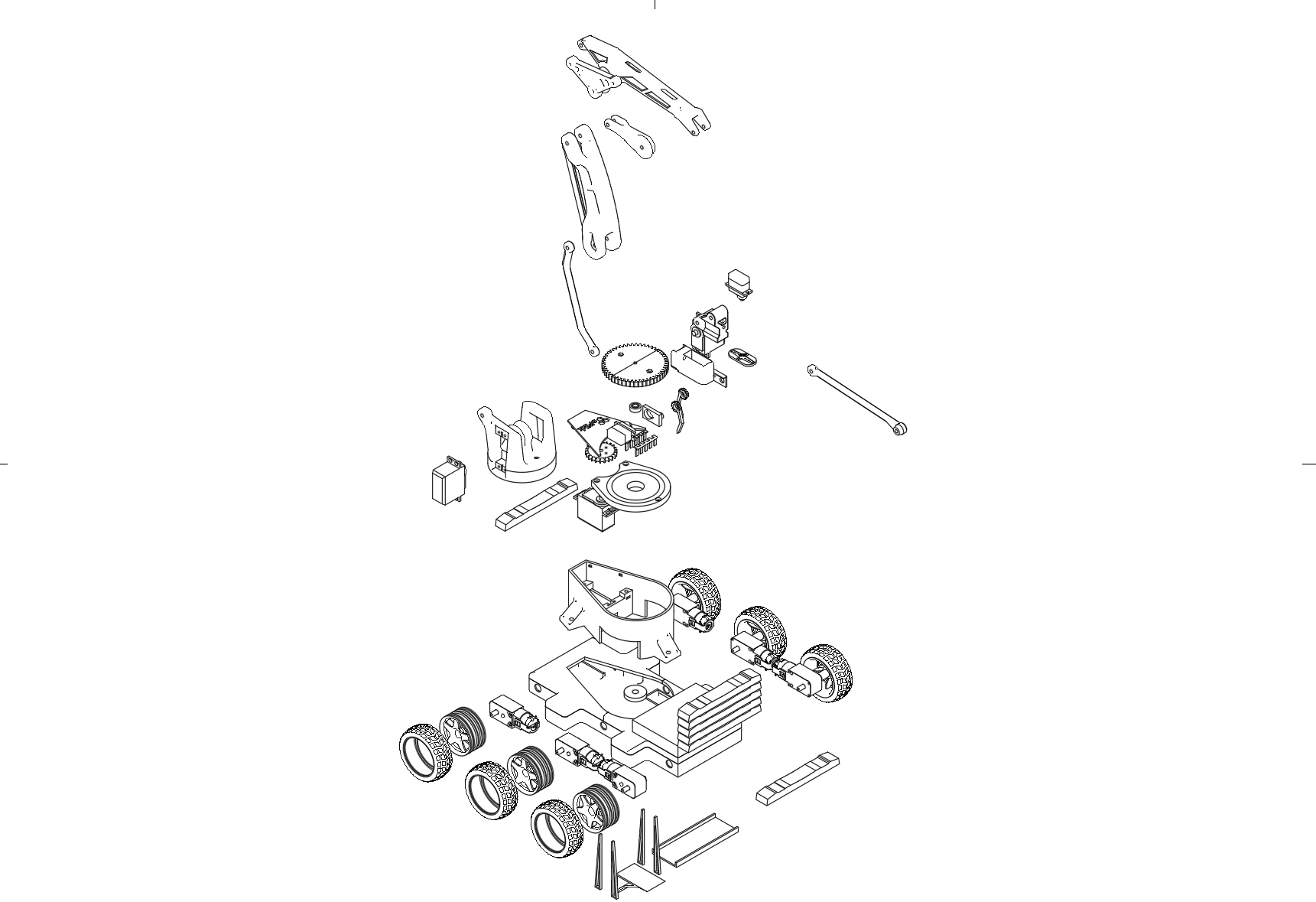
Technical schematic of the robotic arm mounted on a wheeled base with labeled components including the gripper mechanism, staging platform, and stepper motor controls in an industrial facility setting
View Details
Mechanical Integration & Hardware Architecture

The arm was mounted on a reinforced wheeled base engineered for load stability during dynamic movement. An onboard staging platform reduced the dependency on external material handling equipment. Customized spring-loaded gripper jaws provided passive compliance. Stepper motors with microstepping governed the base. Base movement accuracy was left to software-based displacement estimation.

Phase 03
Control System Design
Real-time operating system interface displaying task partitioning and process scheduler with isolated control threads for arm motion, base movement, and displacement computation in a professional monitoring environment
View Details
Control System Design

An RTOS architecture partitioned arm control, base motion, displacement computation, and sequencing into isolated tasks. This ensured deterministic timing, eliminated blocking behavior, and simplified fault isolation. State-driven execution governed synchronization between base translation and arm placement, maintaining predictable mechanical coordination under concurrent operations.

Phase 04
Kinematic Modeling & Displacement Logic
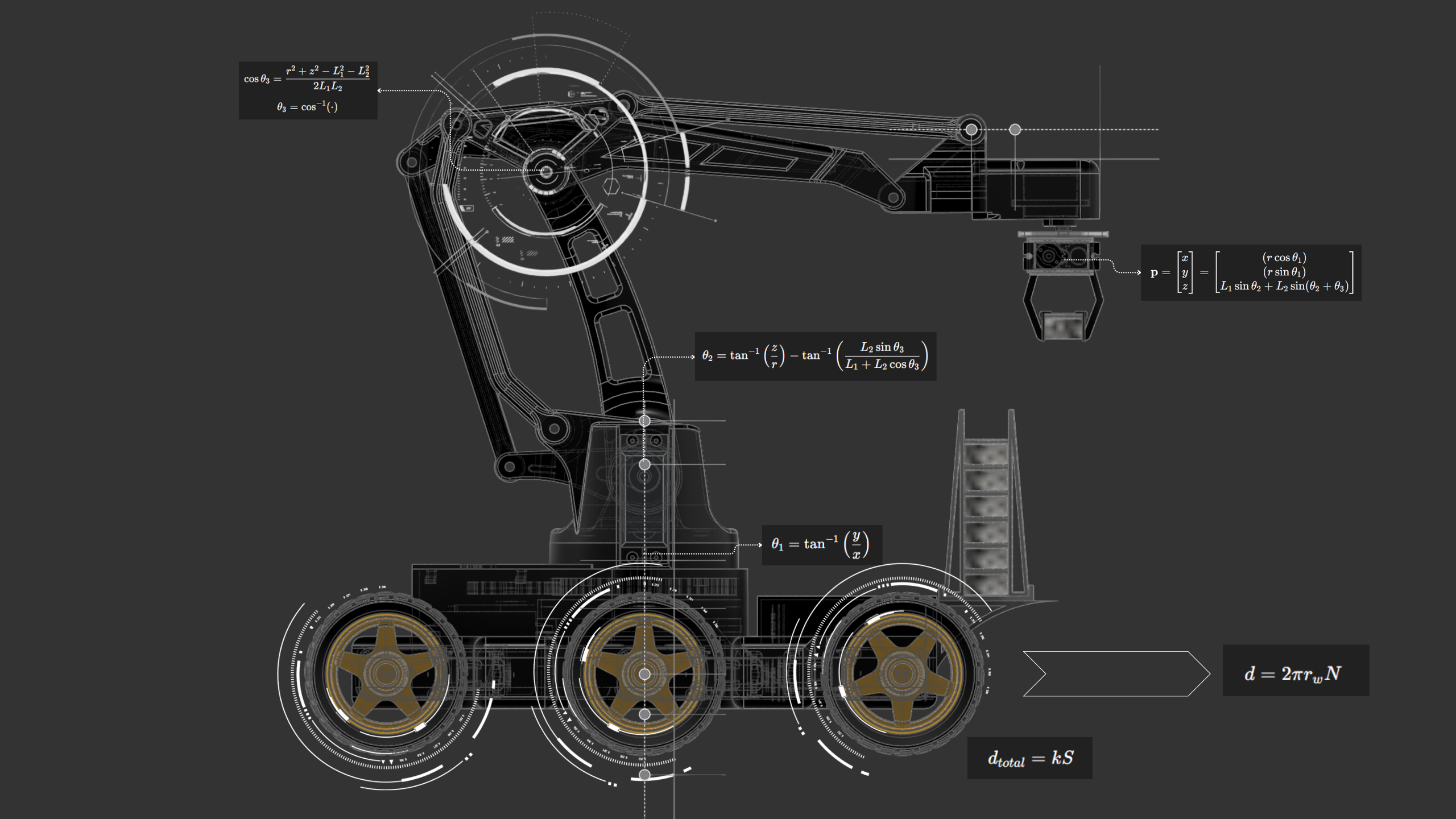
Forward and inverse kinematics diagram illustrating vertical-horizontal-vertical gantry topology with joint coordinates, end-effector positioning, and wheel rotation calculations for railway sleeper placement accuracy
View Details
Kinematic Modeling & Displacement Logic

Forward and inverse kinematics translated placement coordinates into joint-space commands, using a vertical-horizontal-vertical gantry topology to reduce motion singularities. Base displacement was computed using controlled wheel rotation, ensuring repeatable positioning accuracy across multiple placement cycles.

Phase 05
Calibration & Performance Evaluation
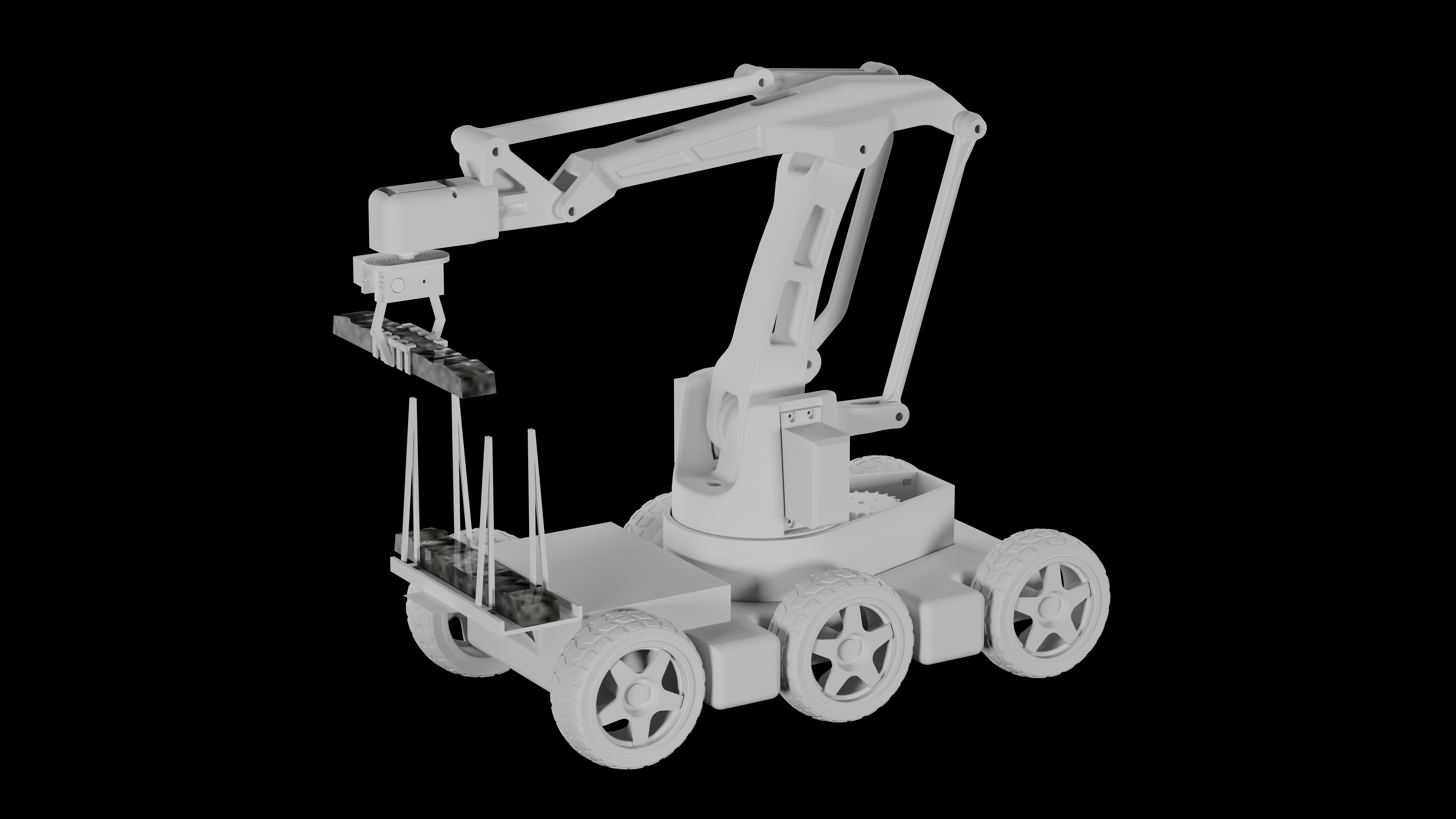
Performance evaluation graph showing cumulative drift analysis, wheel radius calibration constants, and repeatability margins across multiple placement cycles with confidence intervals in a technical laboratory setting
View Details
Calibration & Performance Evaluation

Wheel radius constants were empirically calibrated to align theoretical displacement with measured travel. Multi-cycle placement tests quantified cumulative drift and repeatability margins. Motion parameters were tuned to balance mechanical stability with throughput efficiency. The result was a repeatable, structured sleeper placement workflow — demonstrating disciplined system architecture rather than sensor-heavy compensation.

Learn More
